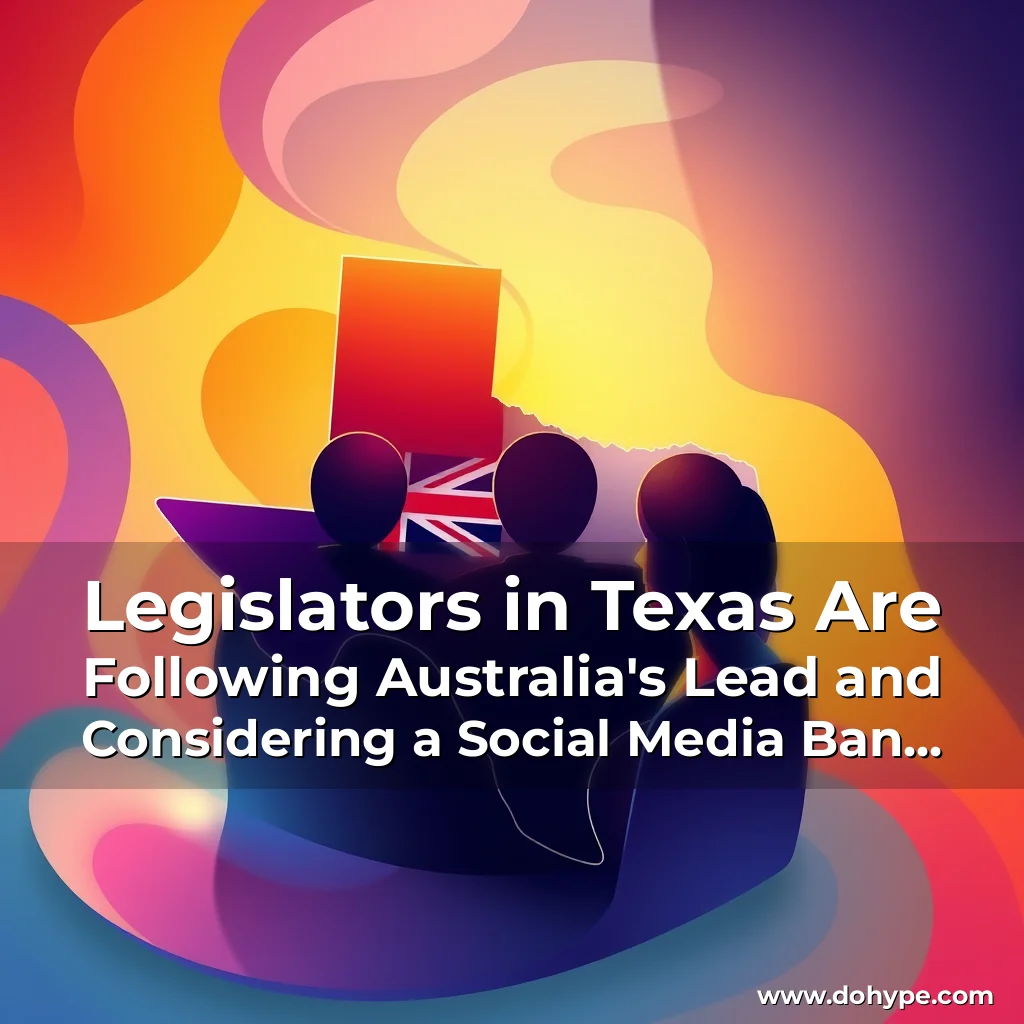
The Texas state legislature has introduced a bill, HB186, that aims to ban social media for minors in the state. The bill has passed the House of Representatives and is now awaiting consideration in the Senate. This move is seen as a response to the growing concerns about the impact of social media on the mental health of children and adolescents.
Why Are Texas Legislators Considering a Social Media Ban for Minors?
- Increased rates of bullying, self-harm, and even suicide among minors have been linked to social media use.
- Social media companies are criticized for failing to adequately address these issues.
- The Texas legislature is citing studies that show the negative effects of social media on minors.
What Did Australia Do to Ban Social Media for Minors?
- Australia introduced a ban on social media for minors 16 years old and younger in November last year.
- The ban requires social media companies to implement an age verification system within 12 months.
- Failure to comply can result in fines of up to $35 million.
What Are the Drawbacks of a Social Media Ban for Minors?
- The ban could negatively impact the livelihoods of minors who use social media to earn money.
- The ban could limit the opportunities for minors to connect with colleges and sports teams.
- The ban could also raise concerns about the invasion of privacy, as age verification systems are used to collect data on minors.
Will a Social Media Ban for Kids Even Work?
“Social media is the most dangerous legal product that children have access to.” – Texas State Rep. Jared Patterson
This statement highlights the concern that social media can have a significant impact on the mental health and well-being of children. However, it is also worth noting that a blanket ban on social media may not be the most effective solution.
What Can Be Done Instead of a Social Media Ban?
- Parents and caregivers can monitor and regulate their children’s social media use.
- Social media companies can implement age verification systems and take steps to address the negative effects of social media on minors.
- Education and awareness campaigns can be launched to promote healthy social media use and online safety among minors.
Conclusion
The Texas state legislature’s consideration of a social media ban for minors is a complex issue that requires careful consideration of the potential benefits and drawbacks. While the concerns about the impact of social media on minors are valid, a blanket ban may not be the most effective solution. Instead, a multi-faceted approach that includes education, regulation, and awareness campaigns may be more effective in promoting healthy social media use and online safety among minors. As we move forward, it is essential to prioritize the well-being and safety of our children and adolescents in the digital age.